
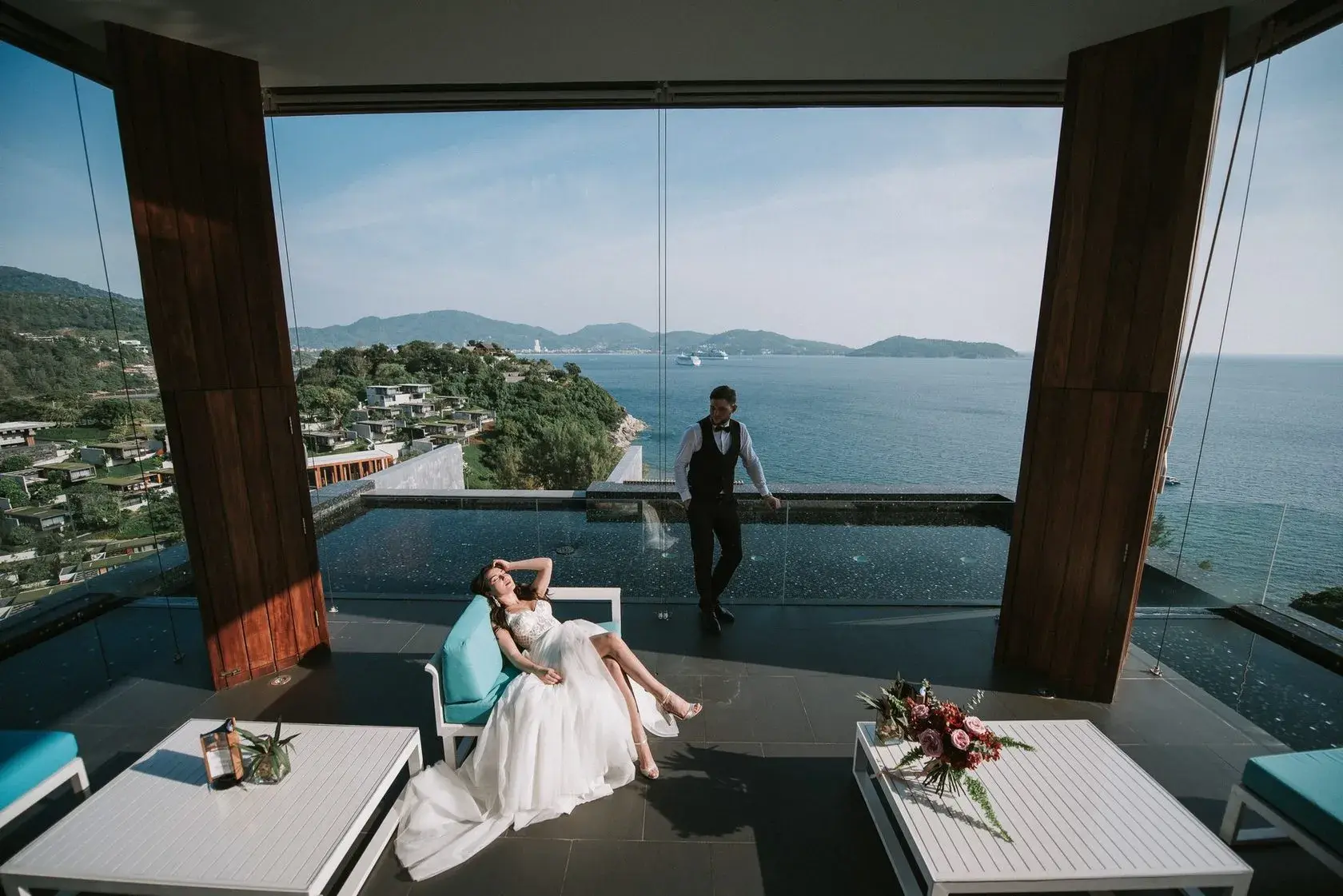
A villa wedding in Thailand can feel impossibly beautiful until you start asking practical questions. Where do guests stay? What happens if the ceremony runs past sunset? Can the villa legally host a larger celebration, or does it only photograph well? A strong villa wedding planning guide should answer those questions early, because the most elegant weddings are usually the ones built on calm, thoughtful decisions.
For many couples, the appeal is immediate. A private villa gives you space, atmosphere and a sense of intimacy that a standard hotel venue often cannot match. You are not sharing a terrace with another event, adjusting your timeline around other guests, or trying to create personality in a space designed for everyone. Instead, you have a setting that feels more personal from the start - whether that means a sea-view lawn in Koh Samui, a tropical hillside estate in Phuket, or a quiet garden property with room for a long dinner under the stars.
Why a villa wedding feels different
A villa celebration is less about renting a venue and more about shaping an experience. The ceremony, cocktail hour, dinner and after-party can all unfold in one private setting, which changes the rhythm of the day. Guests settle in more naturally, the atmosphere feels more relaxed, and the wedding often becomes a full shared stay rather than a few scheduled hours.
That privacy is part of the luxury, but it also affects planning. Villas vary enormously in layout, licensing, access and event rules. Some are ideal for a 20-person celebration and start to feel strained at 50. Others can host a larger wedding beautifully, but only with the right production plan in place. This is where villa wedding planning becomes less about aesthetics alone and more about fit.
The first decision in any villa wedding planning guide
Before you compare flowers, menus or entertainment, decide what kind of celebration you actually want to host. Not just how it should look, but how it should feel. Intimate and slow? Sociable and elegant? A full weekend with family, or a one-day gathering with a private dinner? Your answers will shape the right villa far more than décor references ever will.
Guest count matters here, but so does guest profile. A villa with steps, uneven paths and dramatic cliffside views may be perfect for a stylish elopement or a younger group, yet less practical for elderly relatives or families with small children. Likewise, a property that suits overnight accommodation for close family may still need transport planning for additional guests staying elsewhere.
The best venue decisions usually balance three things - visual appeal, operational ease and the emotional tone you want. If one of those is ignored, the day can still be beautiful, but it may not feel effortless.
How to assess a villa beyond the photographs
Photographs tell you whether a property is attractive. They do not tell you how a wedding moves through the space. Look closely at where a ceremony would take place, where guests would gather afterwards, where dinner tables would sit, and whether there is a natural transition into evening.
A villa may have a stunning poolside area but very limited room for a band, dance floor or covered dining option. Another might have gorgeous interiors yet poor access for catering teams and production equipment. Noise restrictions, curfews and neighbourhood rules are equally important. The dream is privacy, but true privacy depends on what the villa permits as much as what it looks like.
If you are inviting guests from abroad, convenience matters too. Proximity to airports, nearby accommodation, transport routes and local activities can all improve the overall experience. This is particularly relevant in destinations where guests are making a proper holiday of the trip.
Budgeting for a villa wedding without guesswork
One of the most common misconceptions is that a villa wedding is automatically the simpler or cheaper option. Sometimes it can be excellent value, especially for smaller celebrations or multi-day stays. But villas often require more custom planning than hotel packages, which means the budget is built from several moving parts.
The venue hire or accommodation cost is only the beginning. You may also need furniture, lighting, sound, catering infrastructure, staff planning, transport, floral styling and contingency solutions for weather. Some villas include useful basics. Others are essentially a beautiful blank canvas. Neither is better by default - it depends on whether you prefer flexibility or predictability.
A realistic budget should also reflect the level of finish you want. A refined dinner under festoon lights with elegant tablescaping, professional entertainment and polished guest service creates a very different budget from a simple ceremony followed by a relaxed meal. Both can be lovely. The mistake is assuming they require the same logistical investment.
Where couples should be flexible
If your priorities are clear, flexibility becomes much easier. For some couples, the villa itself is the hero and the décor can be understated. For others, guest comfort is non-negotiable, so shaded areas, transport and smooth service take priority over elaborate installations.
If the budget starts to stretch, the gentlest adjustments are often guest count, entertainment scale or table styling complexity. Cutting the elements that affect comfort or flow usually has a bigger impact than reducing decorative detail.
Weather, season and the importance of a Plan B
Thailand offers extraordinary settings for destination weddings, but climate should always be part of the design conversation. Heat, humidity and seasonal rain can shape the timing of a ceremony, the menu, the floral choices and the guest experience.
A late afternoon ceremony is often kinder for everyone than a midday one, especially in exposed outdoor spaces. Shade, hydration and airflow are not small details in tropical conditions - they are part of good hosting. Hair, makeup and attire planning also benefit from realism. The most comfortable wedding usually looks the most polished because no one is fighting the weather.
Rain planning deserves equal care. A proper wet-weather option should still feel beautiful, not like an afterthought. Covered terraces, elegant marquees or an interior space that works visually can protect the atmosphere of the day. If your planner discusses contingency early, that is not pessimism. It is experience.
Guest logistics are part of the romance
Beautiful destination weddings are remembered not only for the ceremony, but for how guests felt throughout the celebration. Were they looked after? Did they know where to go? Was the journey simple? Did the day feel relaxed?
This is where transport planning, accommodation guidance and timeline clarity become essential. A villa wedding often asks more of guests than a hotel event because the venue is private. That can be part of its charm, but it means information needs to be clear and well managed.
If guests are staying in different areas, transport should be coordinated rather than left vague. If the villa has limited parking or a difficult approach road, account for it. If your wedding spans several events, keep the pacing comfortable. A destination celebration should feel generous, not over-scheduled.
Styling a villa wedding well
The most memorable villa weddings tend to work with the setting rather than against it. A property with clean modern architecture may suit sculptural floral design and restrained tablescapes. A tropical garden villa may call for softer, more organic styling. The goal is not to fill every corner, but to enhance what already makes the space special.
This is also where restraint can feel especially luxurious. When the view is extraordinary, or the lawn at sunset is doing much of the work, styling should support the atmosphere rather than compete with it. Candles, thoughtful lighting and beautifully chosen details often create more impact than sheer quantity.
Photography matters too. Villas offer many natural backdrops, but timing is everything. A planner who understands how the light moves through the property can help build a timeline that allows space for portraits, guest moments and an unhurried dinner setting that comes alive as evening falls.
Why local expertise matters in villa wedding planning
Planning from overseas is entirely possible, but it becomes much easier with destination-specific knowledge. Villas are private properties first and event spaces second, which means details can be nuanced. Access windows, supplier permissions, local regulations, cultural ceremony options and area-specific transport realities all affect the final result.
This is particularly true in Thailand, where each destination has its own rhythm. An island villa wedding has different practical considerations from a city celebration or a mountain setting in Chiang Mai. The most reassuring planning support is not simply someone who can style beautifully, but someone who knows how the location behaves in real conditions.
That is why couples often feel more confident working with a specialist such as ThaiWith.Love - not only for the visual curation, but for the quiet problem-solving that sits behind it.
A villa wedding should feel private, personal and beautifully easy to inhabit. If you choose the right setting, plan with honesty about logistics, and protect the guest experience as carefully as the aesthetic, the result is not just a gorgeous day in Thailand. It is a celebration that feels completely your own from the moment everyone arrives.
For many couples, the appeal is immediate. A private villa gives you space, atmosphere and a sense of intimacy that a standard hotel venue often cannot match. You are not sharing a terrace with another event, adjusting your timeline around other guests, or trying to create personality in a space designed for everyone. Instead, you have a setting that feels more personal from the start - whether that means a sea-view lawn in Koh Samui, a tropical hillside estate in Phuket, or a quiet garden property with room for a long dinner under the stars.
Why a villa wedding feels different
A villa celebration is less about renting a venue and more about shaping an experience. The ceremony, cocktail hour, dinner and after-party can all unfold in one private setting, which changes the rhythm of the day. Guests settle in more naturally, the atmosphere feels more relaxed, and the wedding often becomes a full shared stay rather than a few scheduled hours.
That privacy is part of the luxury, but it also affects planning. Villas vary enormously in layout, licensing, access and event rules. Some are ideal for a 20-person celebration and start to feel strained at 50. Others can host a larger wedding beautifully, but only with the right production plan in place. This is where villa wedding planning becomes less about aesthetics alone and more about fit.
The first decision in any villa wedding planning guide
Before you compare flowers, menus or entertainment, decide what kind of celebration you actually want to host. Not just how it should look, but how it should feel. Intimate and slow? Sociable and elegant? A full weekend with family, or a one-day gathering with a private dinner? Your answers will shape the right villa far more than décor references ever will.
Guest count matters here, but so does guest profile. A villa with steps, uneven paths and dramatic cliffside views may be perfect for a stylish elopement or a younger group, yet less practical for elderly relatives or families with small children. Likewise, a property that suits overnight accommodation for close family may still need transport planning for additional guests staying elsewhere.
The best venue decisions usually balance three things - visual appeal, operational ease and the emotional tone you want. If one of those is ignored, the day can still be beautiful, but it may not feel effortless.
How to assess a villa beyond the photographs
Photographs tell you whether a property is attractive. They do not tell you how a wedding moves through the space. Look closely at where a ceremony would take place, where guests would gather afterwards, where dinner tables would sit, and whether there is a natural transition into evening.
A villa may have a stunning poolside area but very limited room for a band, dance floor or covered dining option. Another might have gorgeous interiors yet poor access for catering teams and production equipment. Noise restrictions, curfews and neighbourhood rules are equally important. The dream is privacy, but true privacy depends on what the villa permits as much as what it looks like.
If you are inviting guests from abroad, convenience matters too. Proximity to airports, nearby accommodation, transport routes and local activities can all improve the overall experience. This is particularly relevant in destinations where guests are making a proper holiday of the trip.
Budgeting for a villa wedding without guesswork
One of the most common misconceptions is that a villa wedding is automatically the simpler or cheaper option. Sometimes it can be excellent value, especially for smaller celebrations or multi-day stays. But villas often require more custom planning than hotel packages, which means the budget is built from several moving parts.
The venue hire or accommodation cost is only the beginning. You may also need furniture, lighting, sound, catering infrastructure, staff planning, transport, floral styling and contingency solutions for weather. Some villas include useful basics. Others are essentially a beautiful blank canvas. Neither is better by default - it depends on whether you prefer flexibility or predictability.
A realistic budget should also reflect the level of finish you want. A refined dinner under festoon lights with elegant tablescaping, professional entertainment and polished guest service creates a very different budget from a simple ceremony followed by a relaxed meal. Both can be lovely. The mistake is assuming they require the same logistical investment.
Where couples should be flexible
If your priorities are clear, flexibility becomes much easier. For some couples, the villa itself is the hero and the décor can be understated. For others, guest comfort is non-negotiable, so shaded areas, transport and smooth service take priority over elaborate installations.
If the budget starts to stretch, the gentlest adjustments are often guest count, entertainment scale or table styling complexity. Cutting the elements that affect comfort or flow usually has a bigger impact than reducing decorative detail.
Weather, season and the importance of a Plan B
Thailand offers extraordinary settings for destination weddings, but climate should always be part of the design conversation. Heat, humidity and seasonal rain can shape the timing of a ceremony, the menu, the floral choices and the guest experience.
A late afternoon ceremony is often kinder for everyone than a midday one, especially in exposed outdoor spaces. Shade, hydration and airflow are not small details in tropical conditions - they are part of good hosting. Hair, makeup and attire planning also benefit from realism. The most comfortable wedding usually looks the most polished because no one is fighting the weather.
Rain planning deserves equal care. A proper wet-weather option should still feel beautiful, not like an afterthought. Covered terraces, elegant marquees or an interior space that works visually can protect the atmosphere of the day. If your planner discusses contingency early, that is not pessimism. It is experience.
Guest logistics are part of the romance
Beautiful destination weddings are remembered not only for the ceremony, but for how guests felt throughout the celebration. Were they looked after? Did they know where to go? Was the journey simple? Did the day feel relaxed?
This is where transport planning, accommodation guidance and timeline clarity become essential. A villa wedding often asks more of guests than a hotel event because the venue is private. That can be part of its charm, but it means information needs to be clear and well managed.
If guests are staying in different areas, transport should be coordinated rather than left vague. If the villa has limited parking or a difficult approach road, account for it. If your wedding spans several events, keep the pacing comfortable. A destination celebration should feel generous, not over-scheduled.
Styling a villa wedding well
The most memorable villa weddings tend to work with the setting rather than against it. A property with clean modern architecture may suit sculptural floral design and restrained tablescapes. A tropical garden villa may call for softer, more organic styling. The goal is not to fill every corner, but to enhance what already makes the space special.
This is also where restraint can feel especially luxurious. When the view is extraordinary, or the lawn at sunset is doing much of the work, styling should support the atmosphere rather than compete with it. Candles, thoughtful lighting and beautifully chosen details often create more impact than sheer quantity.
Photography matters too. Villas offer many natural backdrops, but timing is everything. A planner who understands how the light moves through the property can help build a timeline that allows space for portraits, guest moments and an unhurried dinner setting that comes alive as evening falls.
Why local expertise matters in villa wedding planning
Planning from overseas is entirely possible, but it becomes much easier with destination-specific knowledge. Villas are private properties first and event spaces second, which means details can be nuanced. Access windows, supplier permissions, local regulations, cultural ceremony options and area-specific transport realities all affect the final result.
This is particularly true in Thailand, where each destination has its own rhythm. An island villa wedding has different practical considerations from a city celebration or a mountain setting in Chiang Mai. The most reassuring planning support is not simply someone who can style beautifully, but someone who knows how the location behaves in real conditions.
That is why couples often feel more confident working with a specialist such as ThaiWith.Love - not only for the visual curation, but for the quiet problem-solving that sits behind it.
A villa wedding should feel private, personal and beautifully easy to inhabit. If you choose the right setting, plan with honesty about logistics, and protect the guest experience as carefully as the aesthetic, the result is not just a gorgeous day in Thailand. It is a celebration that feels completely your own from the moment everyone arrives.